Oats and Grains in Northern Diets
Historical significance and nutritional role
Oats in Northern Agriculture
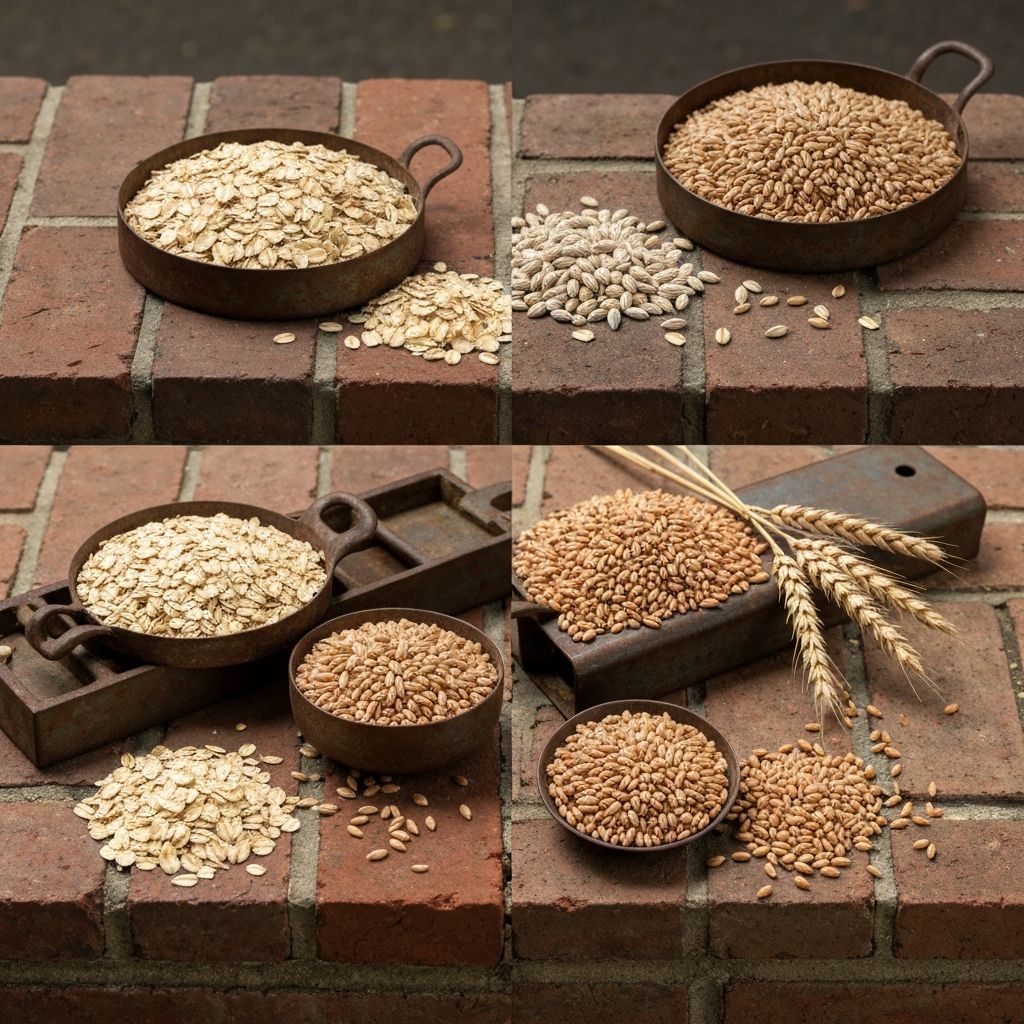
Oats have been cultivated in Northern England for centuries. The climate and soil of regions like Greater Manchester support oat cultivation better than some other crops. Historically, oats provided essential calories and nutrition for northern populations, from agricultural workers to industrial laborers.
Growing and Processing
Oats grow as a hardy crop in cooler climates. The oat grain is typically processed through milling, which removes the hull, creating oat groats. These can be further processed into:
- Rolled Oats (Oatmeal): Steamed and flattened, commonly used in porridge
- Steel-Cut Oats: Groats cut into smaller pieces, with chewier texture
- Oat Flour: Ground from whole oats, used in baking
- Oat Bran: The outer layer, concentrated in fiber
Nutritional Composition
Oats provide a variety of macronutrients and micronutrients:
- Carbohydrates: Primary macronutrient, majority complex carbohydrates
- Protein: Moderate protein content, though incomplete amino acid profile
- Fat: Small amounts, primarily unsaturated fats
- Fiber: Significant fiber content, particularly beta-glucans
- Micronutrients: Manganese, phosphorus, magnesium, and B vitamins
Beta-Glucans and Soluble Fiber
Oats are particularly noted for their beta-glucan content, a type of soluble fiber. Research suggests that beta-glucans may influence various physiological processes including cholesterol metabolism and blood glucose regulation. However, individual responses vary, and oats are one component of overall diet—not a standalone solution.
Traditional Northern Oat Dishes
Oats have been prepared in various traditional northern ways:
- Porridge: Oats cooked with water or milk, sometimes with additions of honey or salt
- Oatcakes: Flatbread made from oat flour and water
- Brose: Hot oatmeal poured into hot broth
- Oat Bread: Bread incorporating oat flour or oatmeal
Oats in Modern Diets
Today, oats remain popular in Northern England and globally. Modern consumption includes porridge, granola, muesli, baked goods, and increasingly as oat-based beverages. Oats are also used in animal feed and industrial applications.
Other Northern Grains
While oats are prominent, other grains have historically been important in Northern diets:
- Barley: Used in both human food and animal feed
- Rye: Particularly in darker breads
- Wheat: Primary grain for bread production
Gluten and Grain Intolerance
Some grains contain gluten (wheat, barley, rye). People with celiac disease or non-celiac gluten sensitivity need to avoid these. Pure oats are naturally gluten-free, though cross-contamination can occur during processing. Individuals with grain intolerances have specific dietary needs.
From Staple to Modern Choice
Grains, particularly oats, represent an important part of Northern English food heritage. Historically essential for survival, they remain valuable foods today—not because they're "super foods," but because they provide accessible nutrition. Individual dietary choices involve considering personal preference, cultural background, digestive tolerance, and nutritional needs.